What Every New Pet Owner Should Have to Be Prepared to Care for a New Puppy
- Hannah

- Aug 6, 2023
- 4 min read
Updated: Sep 18, 2023
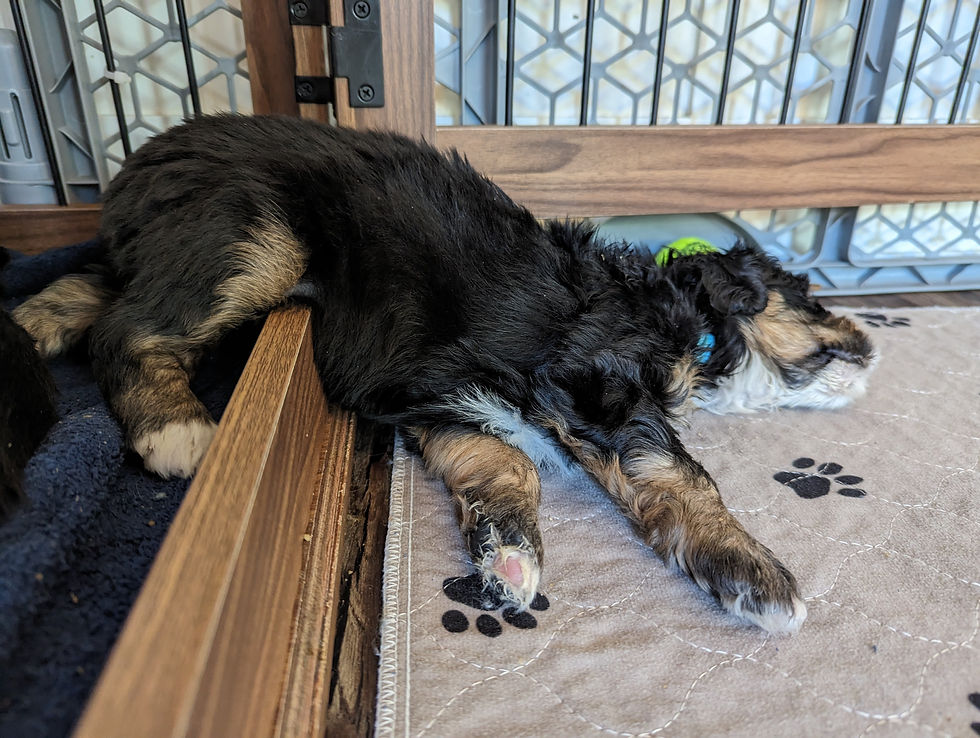
Congratulations on your new puppy! Bringing home a new furry friend is an exciting time, but it's also important to be prepared. Here is a list of essential items that every new pet owner should have to care for a new puppy:
Food and water bowls: Puppies need to eat and drink regularly, so it's important to have sturdy, easy-to-clean bowls that won't be a temptation to chew. Metal bowls are my preference because they do not break like ceramic bowls. Choose bowls that are the right size for your puppy and that are made of a material that won't be easily tipped over. As your puppy gets older and taller, you may want to consider a bowl that is lifted off the ground so your adult dog doesn't have to stoop over.
Dog food: Age and size appropriate dog food is important for proper nutrition. Pay attention to how your dog reacts to food. Excessive indigestion or vomiting could indicate an allergy. If you are transitioning to a new food, it is usually recommended to mix some of the old food with the new food to make the transition more gradual.
Collar and leash: A collar and leash are essential for walks and keeping your puppy safe. Choose a collar that is the right size for your puppy and that has a sturdy buckle. The leash should be long enough for your puppy to have some freedom to explore, but not so long that they can get away from you. Collars and leashes are not just a fun chance to accessorize and express a bit of personality, they also play apart in your training style.
Stylish (raincoats and other dog "clothes" are not recommended for bernedoodles) - https://pupwonders.com/
Outdoorsy - https://ruffwear.com/ and wilderdog.com
Tactical - https://tinyurl.com/2dfhey9k
Hiking Saddlebag (not for puppies) - https://tinyurl.com/3uepfmj4
Runner No-hands Leash - https://tinyurl.com/mrybkxbz
Night Walks - https://tinyurl.com/mt6m9tf2
No pull harness - https://tinyurl.com/2nux23tx
Crate: A crate can be a helpful tool for potty training and housebreaking your puppy. It also provides a safe and comfortable place for your puppy to sleep and relax. Choose a crate that is the right size for your puppy and that has plenty of ventilation. Try to find a a crate that uses materials and design that would make it difficult for the puppy to chew. I recommend starting with a smaller inexpensive crate and holding off on getting the big, quality, nice looking crate until your dog has outgrown their teething phase. Here are examples of different styles:
Metal Crate - https://tinyurl.com/dc2xwwkb
Collapsible Soft Sided - https://tinyurl.com/32jab7xr
Crate with wheels - https://tinyurl.com/mt3r2f2m
Hutch Style - https://tinyurl.com/3cxa2se2
Toys: Puppies need plenty of toys to keep them entertained and to help them chew on their teething pain. Choose a variety of toys, including chew toys, balls, and stuffed animals. It is important to pay attention to labels to ensure chew toys are age/size appropriate. For example, large adult dogs will chew more durable materials than the softer toys designed for small breeds and puppies. Bernedoodles are smart and will enjoy new toys and challenges instead of finding undesirable outlets for boredom. Consider putting the toys away at night and rotating which toys your dog has access to.
Crackle ball - https://tinyurl.com/47zhyye9
Classic Kong Bobble (Can be filled with treats or lightly lined with peanut butter) - https://tinyurl.com/yckafxze
Nylabone Variety Pack - https://tinyurl.com/2p8nv98y
JW Hole Ball (I like to put things inside it) - https://tinyurl.com/ycyc3s57
Teething Ball - https://tinyurl.com/52djrua4
Squirrel Puzzle - https://tinyurl.com/yck4fm7k
Texture mat (dogs don't just need to meet new people, they experience the world through sight, sound, texture, smell, etc. New textures are engaging). - https://tinyurl.com/93v7h8cj
Slow Feeder (These can be fun in addition to slowing down an eager puppy who eats too fast and gets indigestion) - https://tinyurl.com/2p8e64d5
Puzzle Toy - https://tinyurl.com/2wnyheyn
Grooming supplies: Puppies need to be groomed regularly, especially if they have long hair. This includes brushing, bathing, and nail trimming. Choose grooming supplies that are appropriate for your puppy's breed and coat type. Keep in mind getting your pup used to bathing and grooming when they are young will make it easier to bathe them when they are older. Ideally you should allow 4-8 weeks between baths to prevent their skin from drying out.
Tear-free Puppy Shampoo and Conditioner - https://tinyurl.com/mr2baj5r
Grooming Scissors - https://tinyurl.com/5fc7pmz5
Deshedding Brush - https://tinyurl.com/y4jz3b9c
Slicker Brush - https://tinyurl.com/3wn36kct
Puppy pads: Puppy pads can be helpful for potty training your puppy indoors. There are disposable options, but artificial turf may be a good alternative. Place them in a designated area in your home and teach your puppy to use them.
Grass pad - https://shorturl.at/jkxRW
Disposable pad - https://shorturl.at/ehuS1
Poop bags: You'll need poop bags to pick up after your puppy when they go outside. Choose a sturdy bag that is easy to carry and dispose of. Compostable bags are my personal preference.
Compostable poop bags - https://tinyurl.com/28hcw9ky
Vet records: Your puppy should have a well-rounded health care plan, including regular checkups, vaccinations, and parasite prevention. Keep a copy of your puppy's vet records in a safe place. There are also apps available that perform the same function. Some veterinarians offer their own app.
In addition to these essential items, there are a few other things that you may want to consider getting for your new puppy. These include:
A bed or crate pad
A harness
A training collar
A first aid kit
A pet carrier
A microchip
Bringing home a new puppy is a big responsibility, but it's also a lot of fun. By being prepared with the right supplies, you can make the transition easier for both you and your puppy. Here are some additional tips for new pet owners:
Start training your puppy as soon as possible.
Be patient and consistent with training.
Socialize your puppy with other dogs (after they have completed their vaccination series, but not before) and people.
Take your puppy for regular walks and playtime.
Give your puppy plenty of love and attention.
With a little planning and preparation, you can be sure that your new puppy will have a happy and healthy life.


Comments